Playing Music for a Cow (Level 3) · Tocar música para una vaca (nivel 3)
 1
Playing Music for a Cow
Tocar música para una vaca
 2
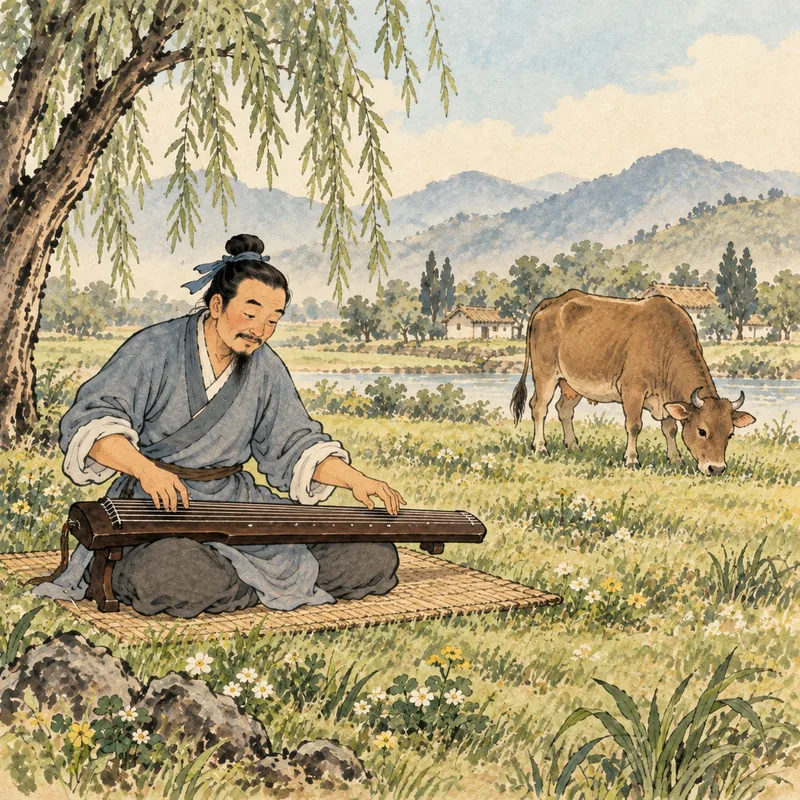
Long ago, there was a man who played the guqin extremely well.
Hace mucho tiempo, había un hombre que tocaba muy bien el guqin.
 3
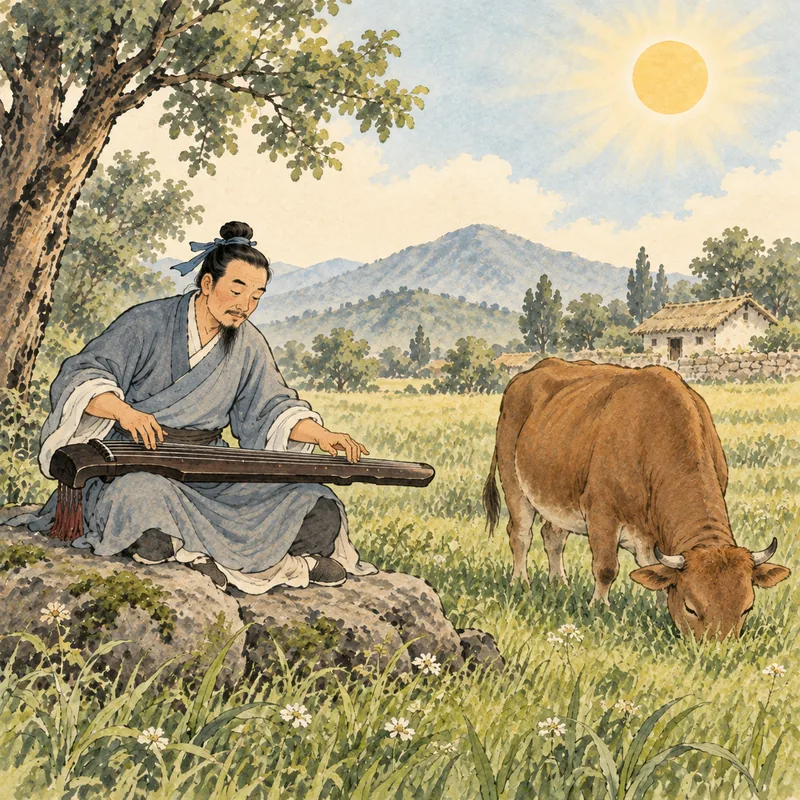
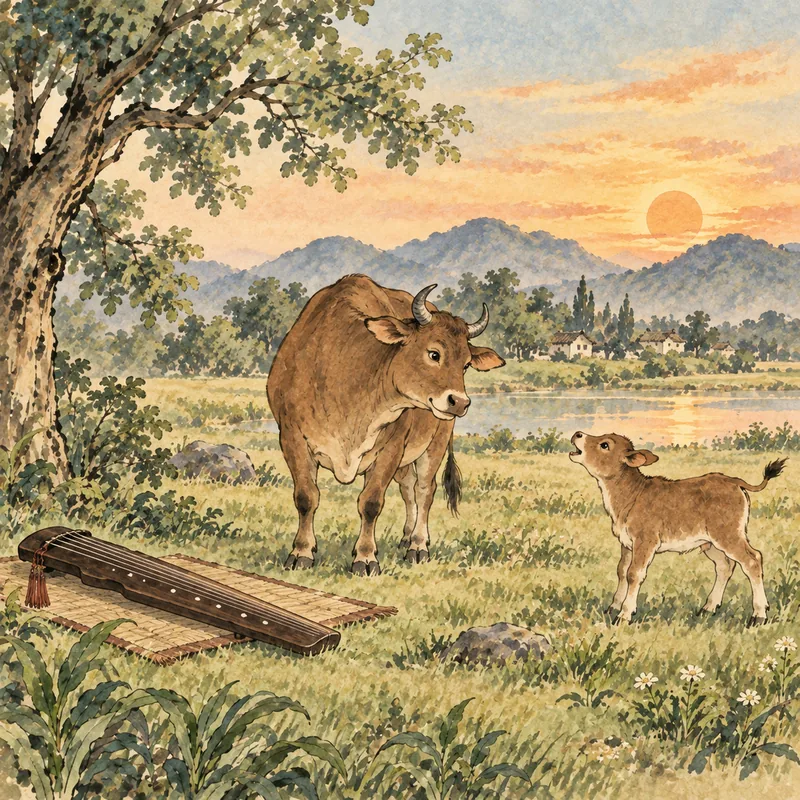
One day, he saw a cow eating grass, so he sat down and played a tune for it.
Un día, vio una vaca comiendo hierba, así que se sentó y tocó una melodía para ella.
 4
The tune sounded beautiful, but the cow only kept its head down eating grass and showed no reaction at all.
La melodía sonaba muy bonita, pero la vaca siguió comiendo con la cabeza baja y no reaccionó en absoluto.
 5
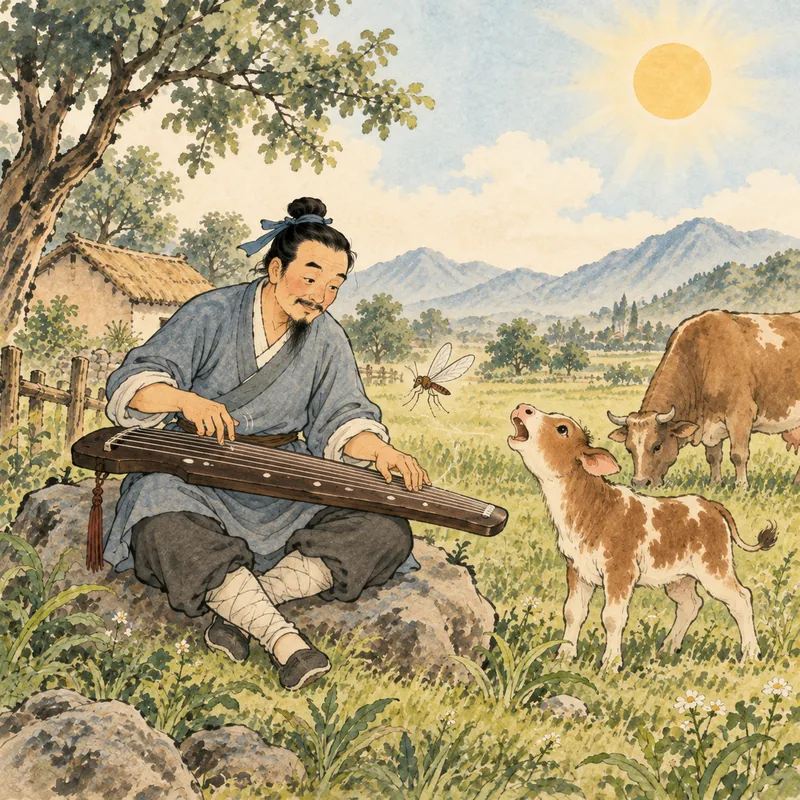
He thought for a moment and changed the way he played. This time, the guqin sounded like a calf calling and a mosquito flying.
Pensó un momento y cambió su manera de tocar. Esta vez, el guqin sonaba como el llamado de un ternero y el vuelo de un mosquito.
 6
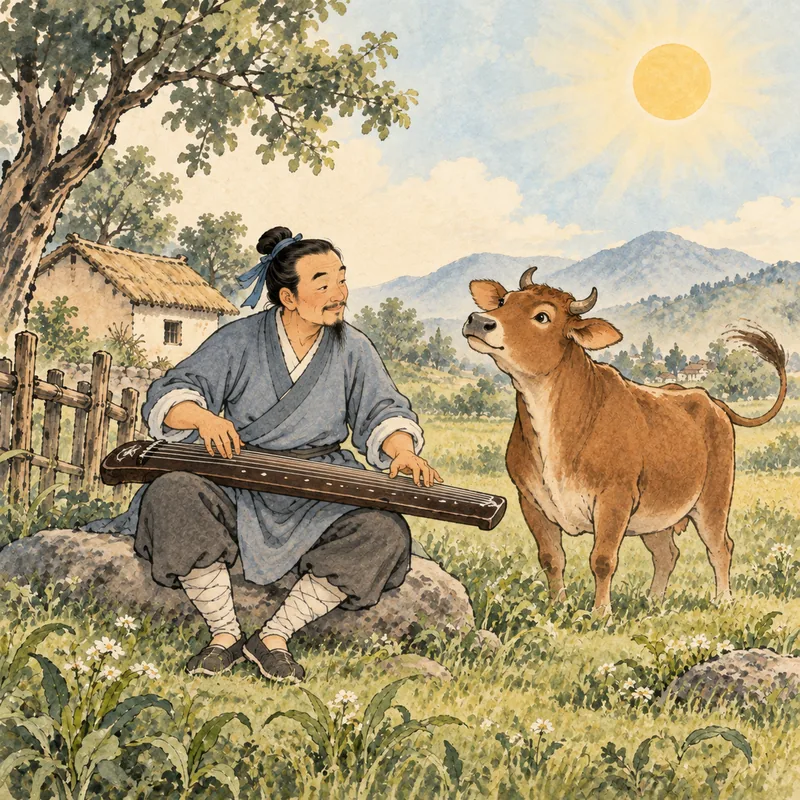
The cow raised its head, swished its tail, and began to listen carefully. It turned out that the guqin was not the problem; he had played the wrong tune at first.
La vaca levantó la cabeza, movió la cola y empezó a escuchar atentamente. Resultó que el problema no era el guqin; al principio había tocado la melodía equivocada.
 7
When you speak, consider your audience; otherwise, they may not understand.
Al hablar, hay que tener en cuenta a quién se dirige uno; de lo contrario, quizá no lo entienda.
 8
If you explain big ideas to a young child and he cannot understand, that is 对牛弹琴. The same thing, told to a three-year-old — how would you say it?
Si le explicas grandes ideas a un niño pequeño y no las entiende, eso es 对牛弹琴. Lo mismo, explicado a un niño de tres años, ¿cómo lo dirías?
9All three languages have a saying that means much the same: Casting pearls before swine.
Los tres idiomas tienen un dicho que significa casi lo mismo: Echar perlas a los cerdos.
Draw your favorite part here.
Dibuja aquí lo que más te gustó.

Listen to the story free
Escucha el cuento gratis
chinesepicturebooks.com