对牛弹琴(三级)
Playing Music for a Cow (Level 3)
Tocar música para una vaca (nivel 3)
📚 成语·历史·地理 · Idioms & history · Refranes e historia · 31 本 · 31 books →
中国文化 · Chinese Culture · Cultura china故事 · Stories · Cuentos
看朗读视频:点下面的按钮 · Watch the read-along: tap a button · Ver el video: toca un botón
锁屏也能听 · Works with the screen locked · Funciona con la pantalla bloqueada

duìniútánqín
对牛弹琴
Playing Music for a Cow
一次看完 · The whole book · Todo el cuento
对牛弹琴
Playing Music for a Cow
Tocar música para una vaca

从前有个人,琴弹得非常好。
Long ago, there was a man who played the guqin extremely well.
Hace mucho tiempo, había un hombre que tocaba muy bien el guqin.
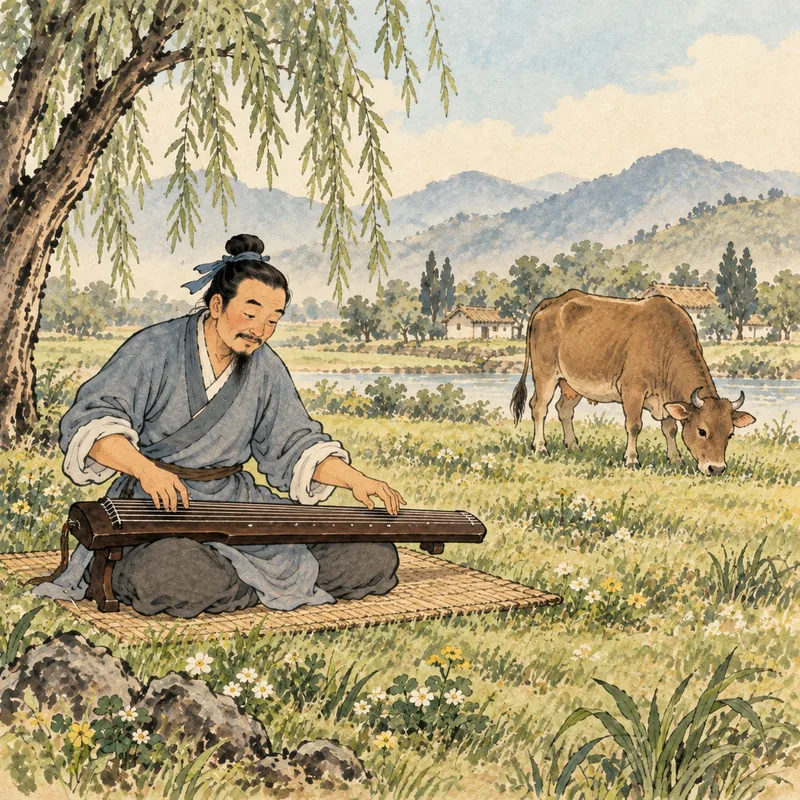
有一天他看见一头牛在吃草,就坐下来给牛弹了一首曲子。
One day, he saw a cow eating grass, so he sat down and played a tune for it.
Un día, vio una vaca comiendo hierba, así que se sentó y tocó una melodía para ella.
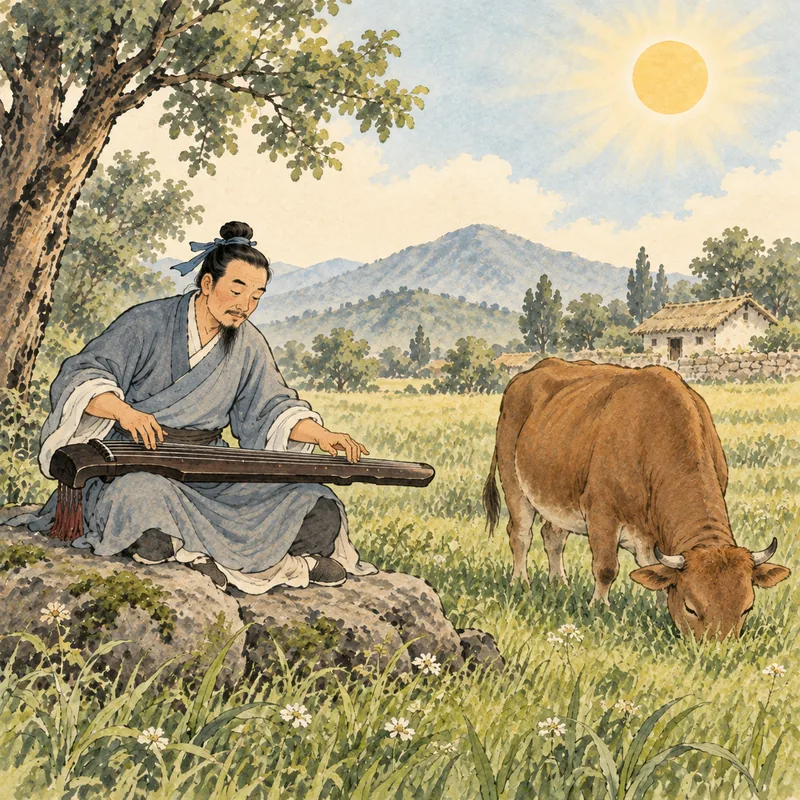
曲子很好听,可是牛只顾低头吃草,一点反应也没有。
The tune sounded beautiful, but the cow only kept its head down eating grass and showed no reaction at all.
La melodía sonaba muy bonita, pero la vaca siguió comiendo con la cabeza baja y no reaccionó en absoluto.
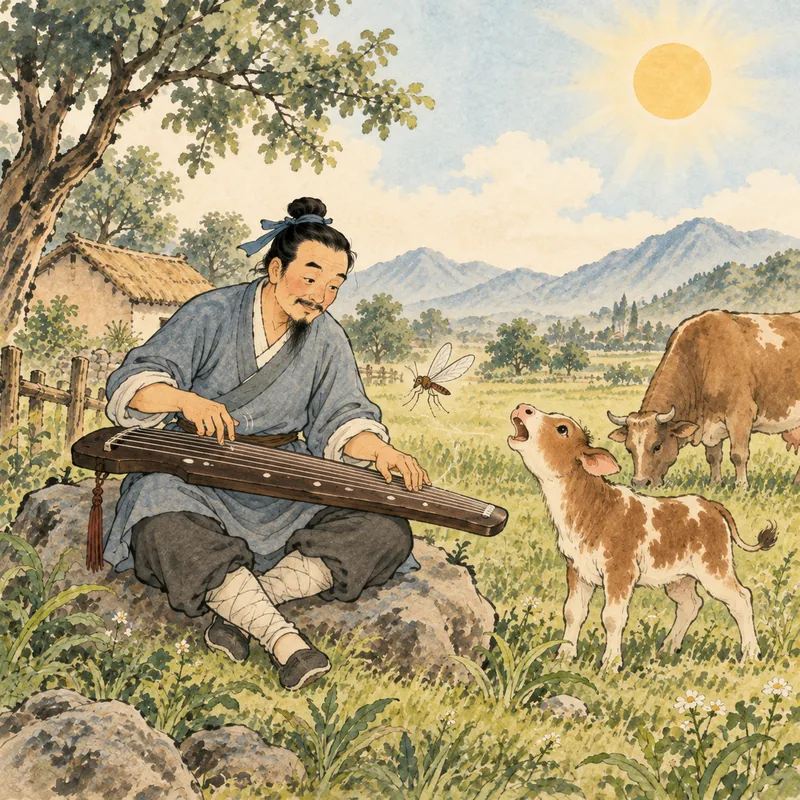
他想了想,换了一种弹法。
He thought for a moment and changed the way he played.
Pensó un momento y cambió su manera de tocar.
这一次,琴声像小牛在叫,像蚊子在飞。
This time, the guqin sounded like a calf calling and a mosquito flying.
Esta vez, el guqin sonaba como el llamado de un ternero y el vuelo de un mosquito.
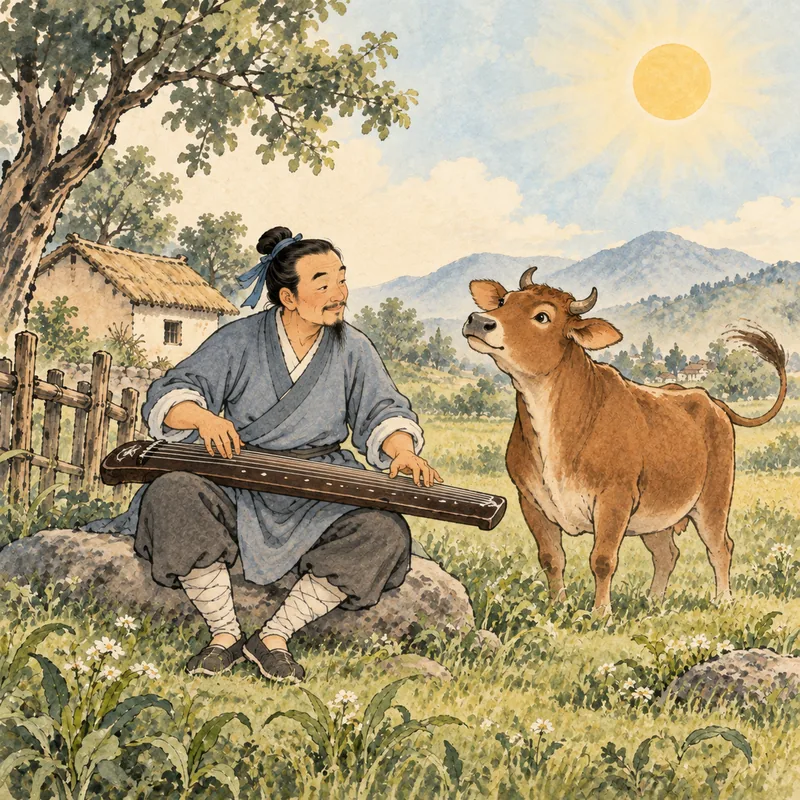
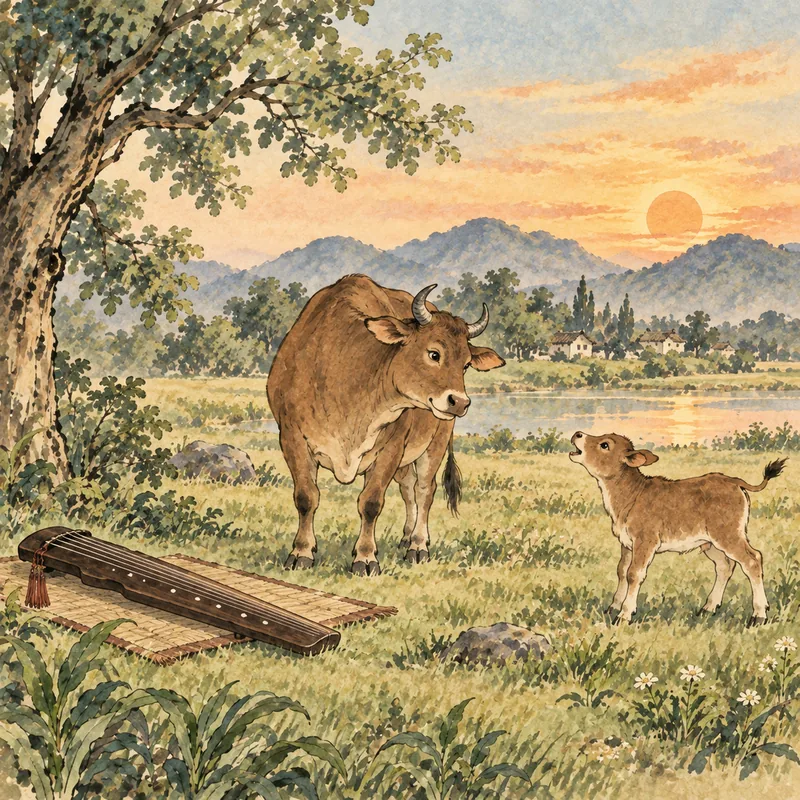
牛抬起头,摇着尾巴,认真听了起来。
The cow raised its head, swished its tail, and began to listen carefully.
La vaca levantó la cabeza, movió la cola y empezó a escuchar atentamente.
原来不是琴不好,是他一开始弹错了曲子。
It turned out that the guqin was not the problem; he had played the wrong tune at first.
Resultó que el problema no era el guqin; al principio había tocado la melodía equivocada.
说话要看对象,否则对方可能听不懂。
When you speak, consider your audience; otherwise, they may not understand.
Al hablar, hay que tener en cuenta a quién se dirige uno; de lo contrario, quizá no lo entienda.

你跟小朋友讲大道理,他听不懂,这就是对牛弹琴。
If you explain big ideas to a young child and he cannot understand, that is 对牛弹琴.
Si le explicas grandes ideas a un niño pequeño y no las entiende, eso es 对牛弹琴.
同一件事,说给三岁的孩子听,该怎么说?
The same thing, told to a three-year-old — how would you say it?
Lo mismo, explicado a un niño de tres años, ¿cómo lo dirías?
三种语言,都有意思差不多的话:
All three languages have a saying that means much the same:
Los tres idiomas tienen un dicho que significa casi lo mismo:
对牛弹琴。
Casting pearls before swine.
Echar perlas a los cerdos.
生词 · Words in this book · Palabras
83 个词 ,其中 27 个是全站第一次出现 · 83 words, 27 appearing for the first time anywhere on the site
- 对牛弹琴duìniútánqín
- 从前cóngqián
- 有yǒu
- 个人gèrén
- 琴弹qíndàn
- 得dé
- 非常fēicháng
- 好hǎo
- 一天yìtiān
- 他tā
- 看见kànjiàn
- 一头yìtóu
- 牛niú
- 在zài
- 吃chī
- 草cǎo
- 就jiù
- 坐下zuòxià
- 来lái
- 给gěi
- 牛弹niúdàn
- 了le
- 一首yìshǒu
- 曲子qǔzi
- 很hěn
- 好听hǎotīng
- 可是kěshì
- 只顾zhǐgù
- 低头dītóu
- 一点yìdiǎn
- 反应fǎnyìng
- 也yě
- 没有méiyǒu
- 想xiǎng
- 换huàn
- 一种yìzhǒng
- 弹法dànfǎ
- 这zhè
- 一次yícì
- 琴声qínshēng
- 像xiàng
- 小牛xiǎoniú
- 叫jiào
- 蚊子wénzi
- 飞fēi
- 抬起táiqǐ
- 头tóu
- 摇着yáozhe
- 尾巴wěiba
- 认真rènzhēn
- 听tīng
- 起来qǐlái
- 原来yuánlái
- 不是búshì
- 琴qín
- 不好bùhǎo
- 是shì
- 一yī
- 开始kāishǐ
- 弹错dàncuò
- 说话shuōhuà
- 要yào
- 看kàn
- 对象duìxiàng
- 否则fǒuzé
- 对方duìfāng
- 可能kěnéng
- 听不懂tīngbùdǒng
- 你nǐ
- 跟gēn
- 小朋友xiǎopéngyǒu
- 讲jiǎng
- 大道理dàdàolǐ
- 就是jiùshì
- 同一件tóngyíjiàn
- 事shì
- 说给shuōgěi
- 三岁sānsuì
- 的de
- 孩子háizi
- 该gāi
- 怎么zěnme
- 说shuō


