You Can't Pour from an Empty Cup · Más vale paso que dure
 1
You Can't Pour from an Empty Cup
Más vale paso que dure
 2
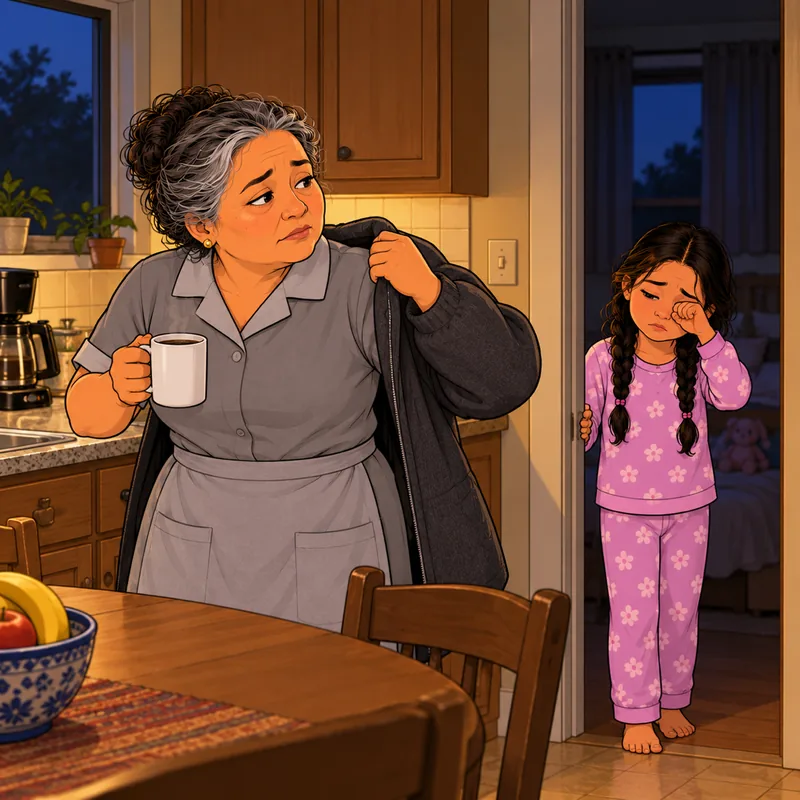
In the morning I clean at the hotel, and at night I clean offices. I work fourteen hours a day. Grandma, you're not eating dinner at home again tonight?
En la mañana limpio en el hotel y en la noche limpio oficinas. Trabajo catorce horas al día. Abuela, ¿hoy otra vez no vas a cenar en casa?
 3
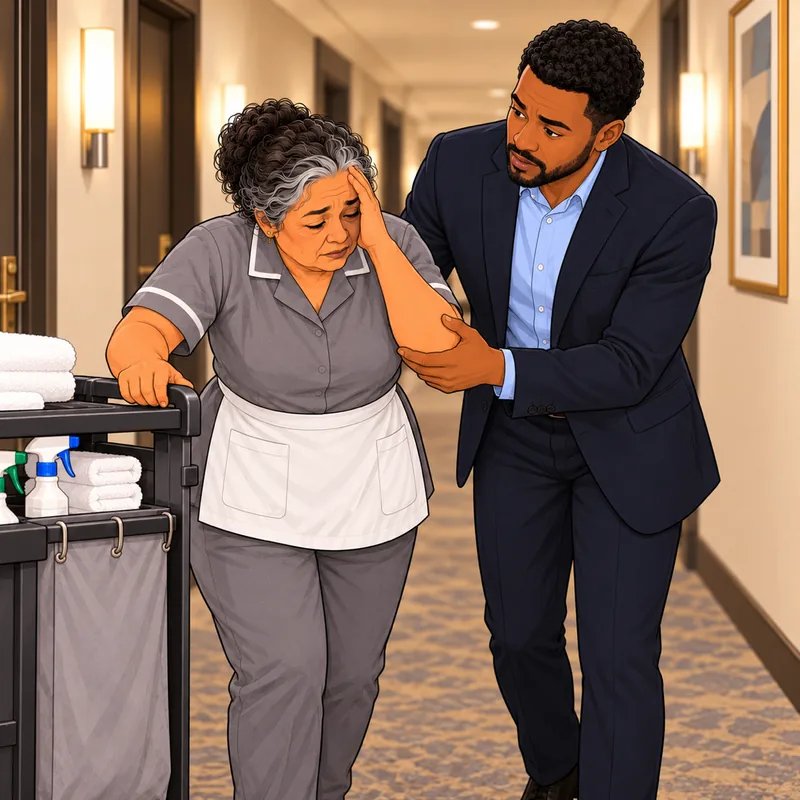
Rosa, you look pale. Are you okay? I'm just a little dizzy. I'm fine — I can keep going. Sit down first and drink some water. Take ten minutes — it's your right.
Rosa, te ves pálida. ¿Estás bien? Nomás estoy un poco mareada. Estoy bien, puedo seguir. Primero siéntate y toma agua. Descansa diez minutos; es tu derecho.
 4
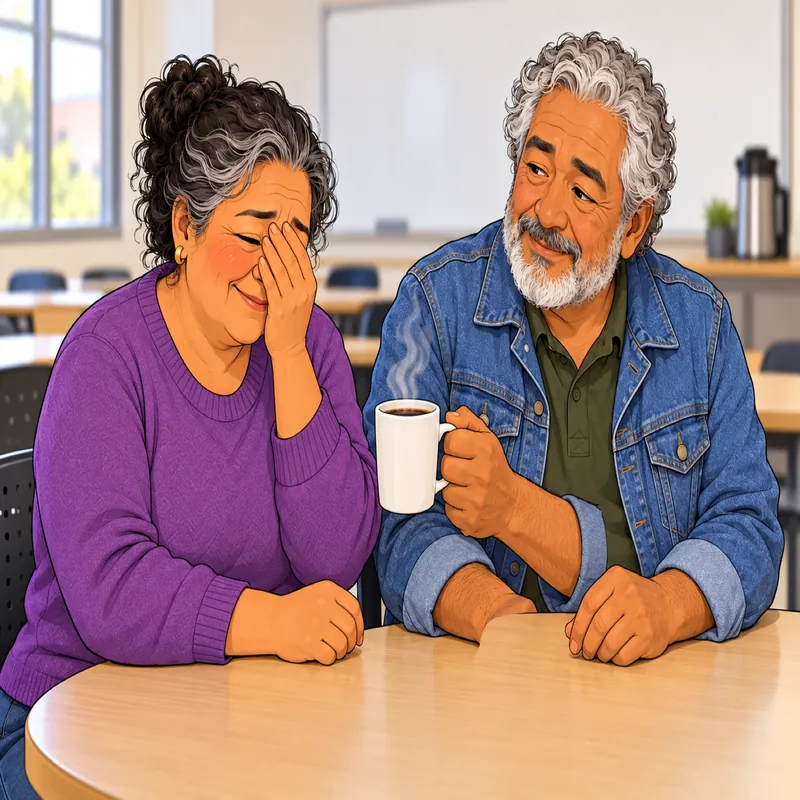
Rosa fell asleep in class. She works too much every day. Let's let her sleep a bit.
Rosa se quedó dormida en clase. Trabaja demasiado todos los días. Dejémosla dormir un ratito.
 5
I'm sorry, I'm so tired. But I can't rest — my family needs the money. My grandmother used to say: Más vale paso que dure y no trote que canse — a steady pace that lasts is better than a run that wears you out.
Perdón, estoy muy cansada. Pero no puedo descansar; mi familia necesita el dinero. Mi abuela decía: «Más vale paso que dure y no trote que canse».
 6
In Chinese we say: 磨刀不误砍柴工 — sharpening the axe doesn't slow down the woodcutting. A sharp axe cuts faster. In English we say: You can't pour from an empty cup. You have to take care of yourself before you can take care of others.
En chino decimos: 磨刀不误砍柴工, afilar el hacha no retrasa cortar la leña. Un hacha afilada corta más rápido. En inglés decimos: «No puedes servir de una taza vacía». Primero tienes que cuidarte tú para poder cuidar a los demás.
 7
Grandma, if you get sick, who will take care of me? …You're right, sweetheart. Grandma needs to rest.
Abuela, si te enfermas, ¿quién me va a cuidar? …Tienes razón, mi amor. La abuela necesita descansar.
 8
From now on, I won't work Wednesday and Friday nights. I need to rest. Okay, I'll find someone else. Thanks for telling me ahead of time.
De ahora en adelante no voy a trabajar los miércoles ni los viernes en la noche. Necesito descansar. Está bien, busco a alguien más. Gracias por avisarme con tiempo.
 9
Grandma, you smiled so many times today! Rest a little, and everything feels different. Next Saturday, let's go to the beach!
¡Abuela, hoy sonreíste muchísimas veces! Descansas un poco y todo se siente distinto. ¡El próximo sábado vamos a la playa!
 10
Three languages, almost the same meaning: Chinese says "磨刀不误砍柴工" — sharpening the axe doesn't slow down the woodcutting. English says "You can't pour from an empty cup." Spanish says "Más vale paso que dure y no trote que canse." Resting when you're tired isn't being lazy. In California, you get a ten-minute break for every four hours of work. If you're often dizzy or can't sleep, see a doctor.
Tres idiomas, casi lo mismo: el chino dice «磨刀不误砍柴工», afilar el hacha no retrasa la leña. El inglés dice «You can't pour from an empty cup». El español dice «Más vale paso que dure y no trote que canse». Descansar cuando está cansado no es flojera. En California tiene un descanso de diez minutos por cada cuatro horas de trabajo. Si se marea seguido o no duerme bien, vaya al médico.
Draw your favorite part here.
Dibuja aquí lo que más te gustó.

Listen to the story free
Escucha el cuento gratis
chinesepicturebooks.com