Let It All Out · Llorar no es de débiles
 1
Let It All Out
Llorar no es de débiles
 2
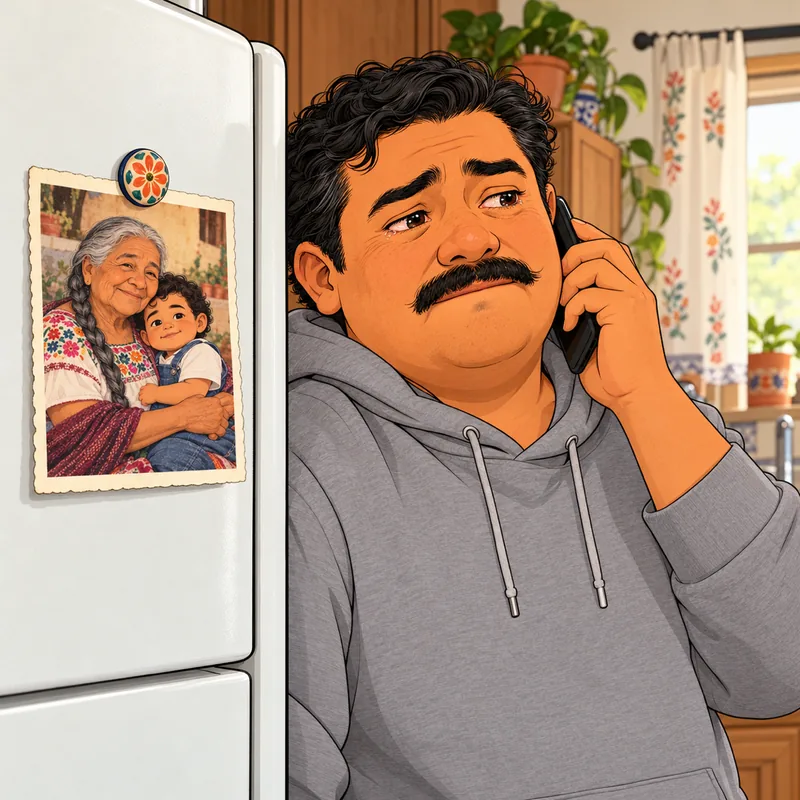
Luis, Grandma passed away last night. What? I talked to her on the phone just last Sunday… The funeral is on Saturday. Can you come home?
Luis, la abuela falleció anoche. ¿Qué? Hablé con ella por teléfono el domingo pasado… El funeral es el sábado. ¿Puedes venir?
 3
I can't go back. The plane ticket is too expensive, and I can't take that many days off. Luis… I'm so sad. Don't cry, Lupe. I'm fine. I'm really fine.
No puedo ir. El boleto es muy caro y no me dan tantos días libres. Luis… estoy tan triste. No llores, Lupe. Estoy bien. De veras, estoy bien.
 4
Luis, you look pale. Are you okay? I'm fine. I'm good.
Luis, te ves pálido. ¿Estás bien? Estoy bien. Todo bien.
 5
Luis, you haven't told a single joke today. What happened? My grandma passed away. She raised me. But I can't go back to say goodbye.
Luis, hoy no has contado ni un chiste. ¿Qué pasó? Murió mi abuela. Ella me crió. Pero no puedo ir a despedirla.
 6
If you want to cry, go ahead and cry. Men don't cry. My dad told me that since I was little. Chinese people say: "A man doesn't shed tears easily." But there's a second half: "Only because his heart isn't broken yet."
Si quieres llorar, llora. Los hombres no lloran. Mi papá me lo decía desde niño. En chino decimos: «Un hombre no llora fácilmente». Pero sigue: «Solo porque aún no le han roto el corazón».
 7
Let it all out. We are all here. Every Sunday, Grandma made tortillas for me. I miss her so much.
Desahógate. Aquí estamos todos. Cada domingo mi abuela me hacía tortillas. La extraño mucho.
 8
In Spanish we say: "Llorar no es de débiles" — crying isn't weakness. In English we say: "Let it all out." After you cry, your heart feels a little lighter.
En español decimos: «Llorar no es de débiles». En inglés decimos: «Let it all out», sácalo todo. Después de llorar, el corazón pesa un poco menos.
 9
Lupe, I can't come home, but I made Grandma's tortillas. Grandma would be so happy. That night I cried for a long time. After I let it all out, I felt much better.
Lupe, no puedo ir, pero hice las tortillas de la abuela. La abuela estaría muy contenta. Esa noche lloré mucho. Después de desahogarme, me sentí mucho mejor.
 10
Three languages, almost the same meaning: Chinese says "哭出来就好了" — once you cry it out, you'll feel better. English says "Let it all out." Spanish says "Llorar no es de débiles" — crying isn't weakness. Many immigrants live far from home. When someone they love dies, they can't always go back for the funeral. You can join by video, light a candle, cook a dish they loved, or talk with a friend. If the sadness lasts a long time and doesn't get better, you can tell your doctor.
Tres idiomas, casi lo mismo: el chino dice «哭出来就好了», llorar te hará sentir mejor. El inglés dice «Let it all out». El español dice «Llorar no es de débiles». Muchos inmigrantes viven lejos de casa. Cuando muere un ser querido, no siempre pueden ir al funeral. Puedes acompañar por videollamada, encender una vela, cocinar un plato que le gustaba o hablar con un amigo. Si la tristeza dura mucho y no mejora, puedes decírselo a tu médico.
Draw your favorite part here.
Dibuja aquí lo que más te gustó.

Listen to the story free
Escucha el cuento gratis
chinesepicturebooks.com