对牛弹琴(二级)
Playing to a Cow (Level 2)
Tocar para una vaca (nivel 2)
duìniútánqín
对牛弹琴
Playing Music for a Cow
一次看完 · The whole book at once
对牛弹琴
Playing Music for a Cow
Tocar música para una vaca
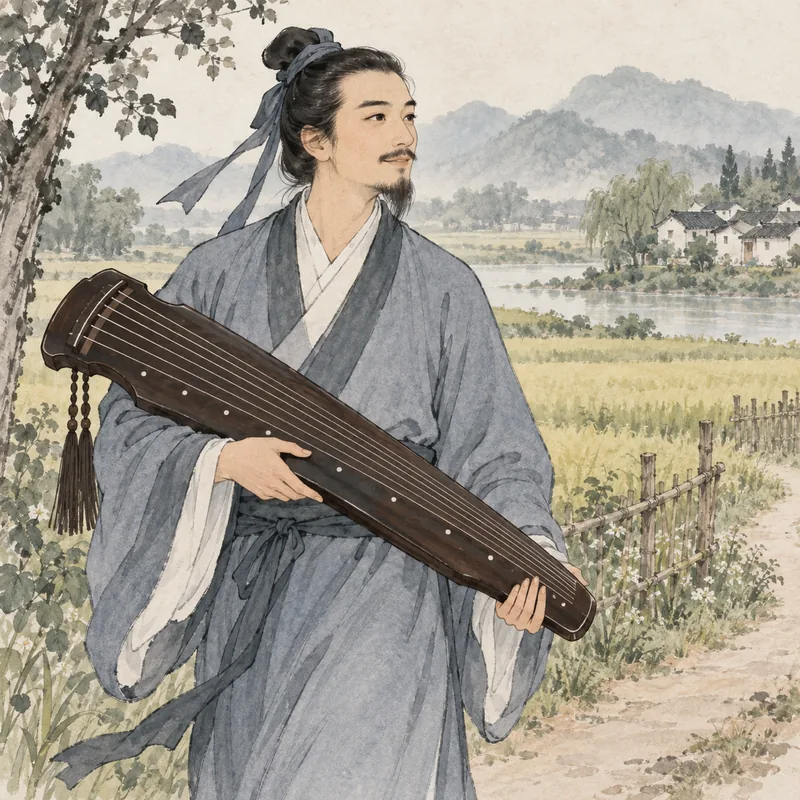
从前有个人,琴弹得很好。
Long ago, there was a man who played the guqin very well.
Hace mucho tiempo, había un hombre que tocaba muy bien el guqin.
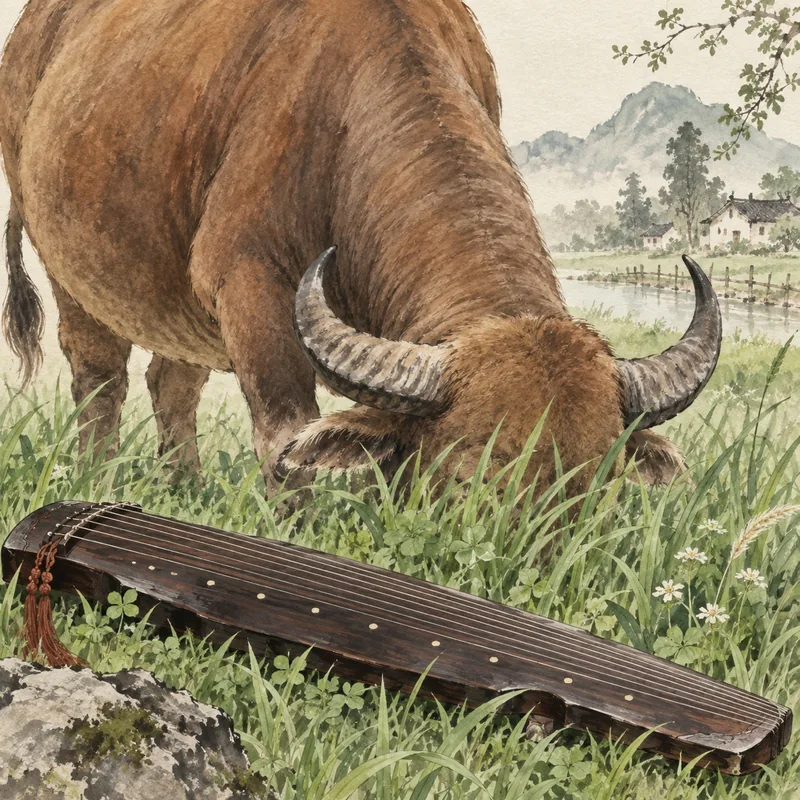
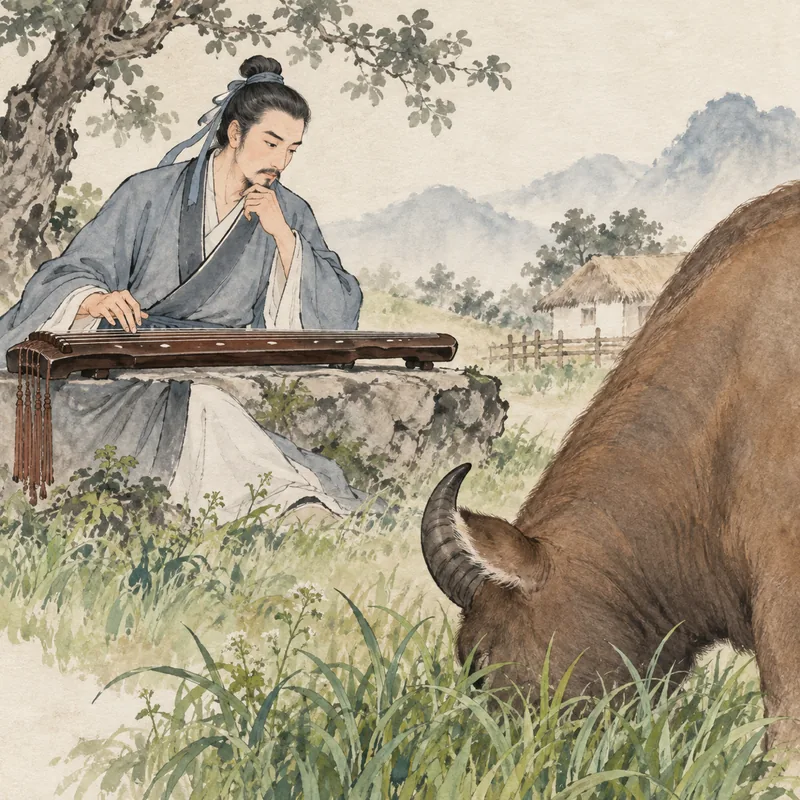
有一天,他看见一头牛吃草。
One day, he saw a cow eating grass.
Un día, vio a una vaca comiendo hierba.
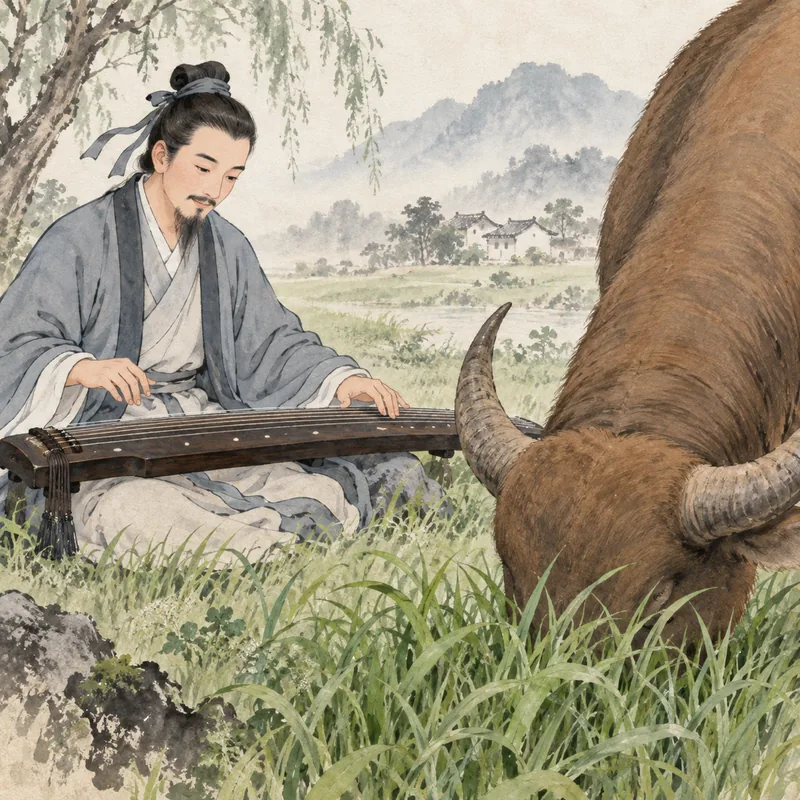
他坐下来给牛弹了一首曲子。
He sat down and played a tune for the cow.
Se sentó y tocó una melodía para la vaca.
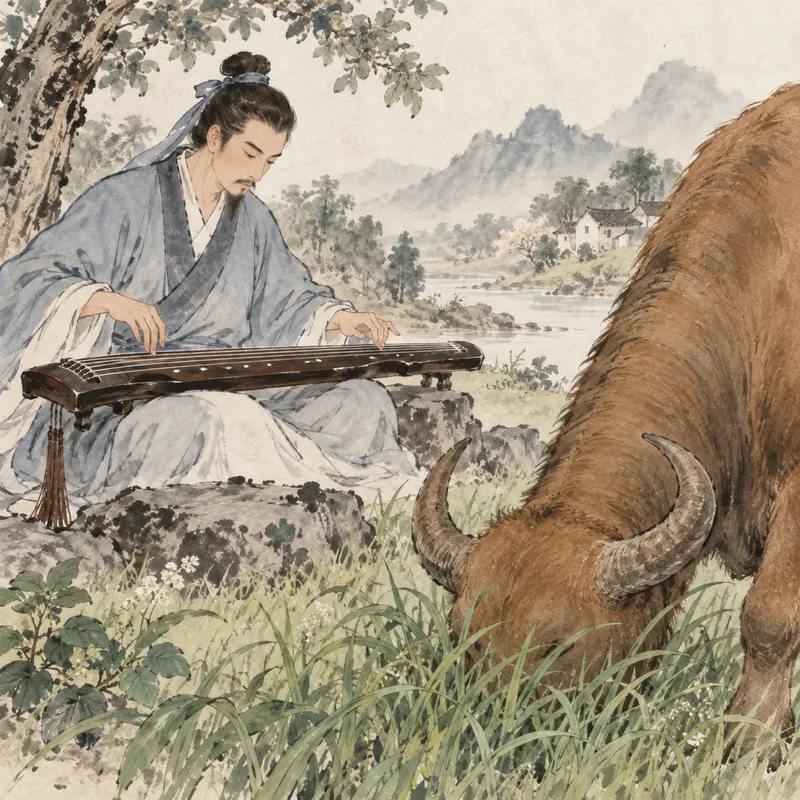
曲子很好听,牛却只顾吃草。
The tune was beautiful, but the cow only kept eating grass.
La melodía era hermosa, pero la vaca solo siguió comiendo hierba.
它一次也没抬头。
She never lifted her head.
No levantó la cabeza ni una vez.
他想了想,换了一种弹法。
He thought for a moment and changed how he played.
Pensó un momento y cambió su manera de tocar.
这回琴声像小牛在叫。
This time the guqin sounded like a little calf calling.
Esta vez el guqin sonaba como un ternerito llamando.
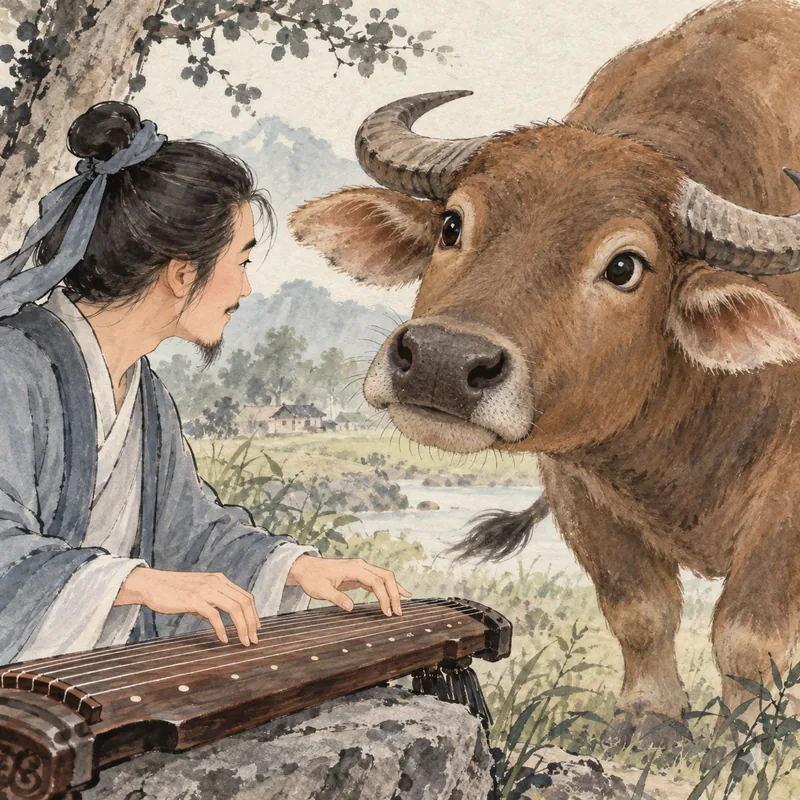
牛抬起头,摇着尾巴听了起来。
The cow lifted her head and listened, swishing her tail.
La vaca levantó la cabeza y escuchó, moviendo la cola.
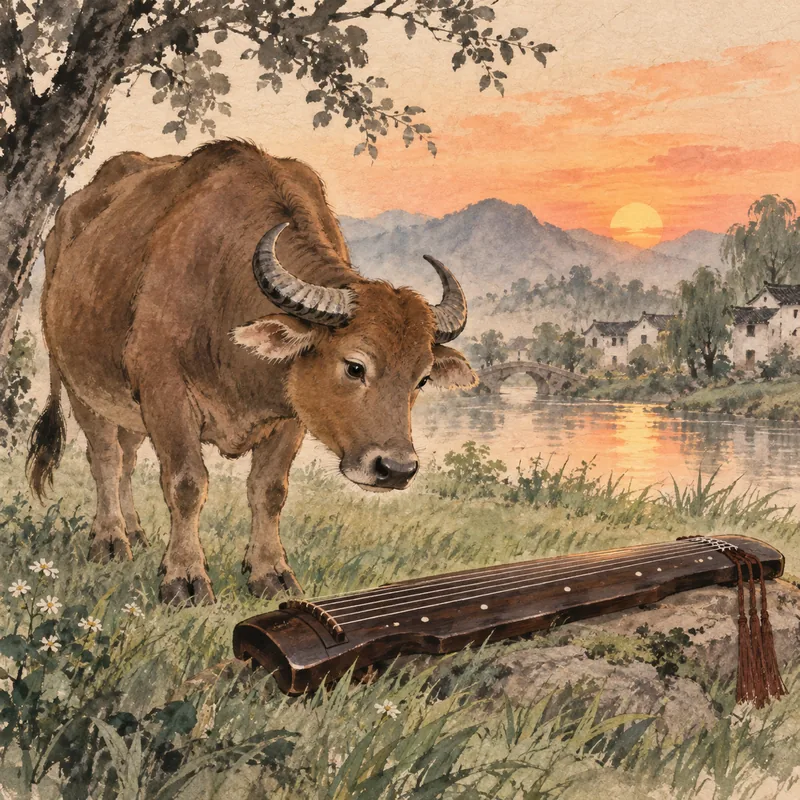
不是琴不好,是他弹错了曲子。
The guqin was not bad; he had chosen the wrong tune.
El guqin no era malo; él había elegido la melodía equivocada.
说话要看对象,不然对方听不懂。
Speak for your listener, or they may not understand.
Habla pensando en quien escucha, o quizá no entienda.
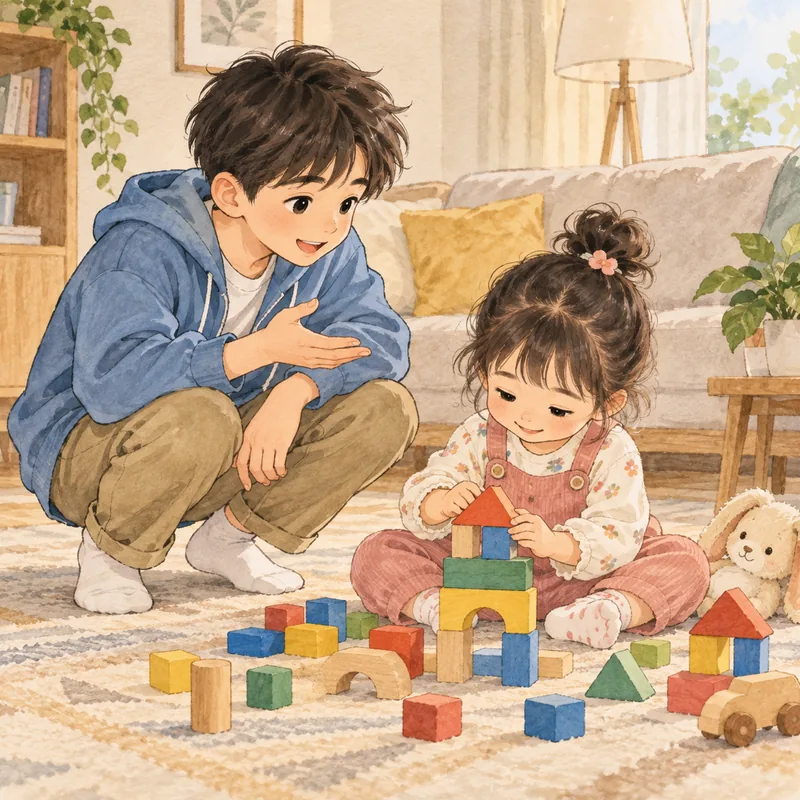
跟小小孩讲大道理,他听不懂。
If you explain big ideas to a very young child, they may not understand.
Si le explicas grandes ideas a un niño muy pequeño, quizá no las entienda.
他该怎么说,小孩才听得懂?
How should he say it so the child understands?
¿Cómo debería decirlo para que el niño lo entienda?