画龙点睛(二级)
Dotting the Dragon's Eyes (Level 2)
Poner los ojos al dragón (Nivel 2)
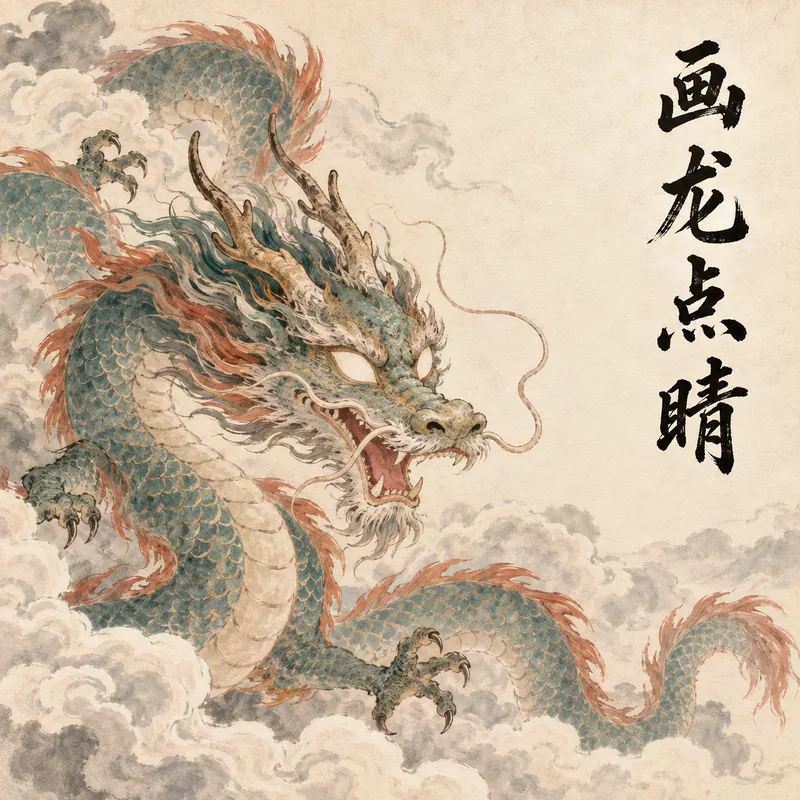
huàlóngdiǎnjīng
画龙点睛
Dotting the Dragon's Eyes
一次看完 · The whole book at once
画龙点睛
Dotting the Dragon's Eyes
Poner los ojos al dragón
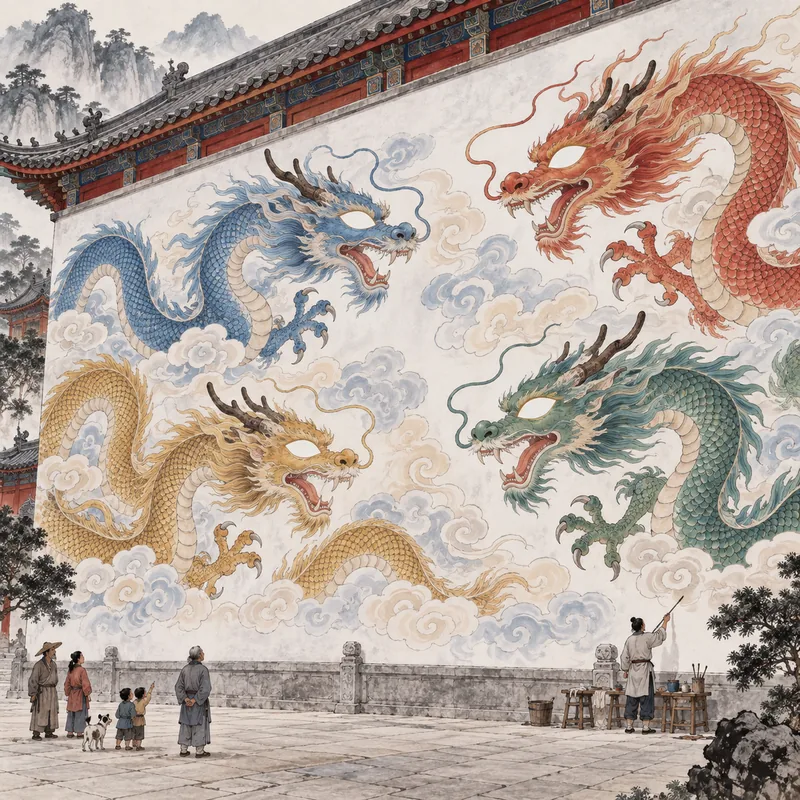
从前有个画家,在墙上画了四条龙。
Long ago a painter drew four dragons on a wall.
Hace mucho, un pintor dibujó cuatro dragones en un muro.
龙画得真好,只有眼睛没画。
The dragons were splendid — only the eyes were missing.
Los dragones eran magníficos; solo faltaban los ojos.
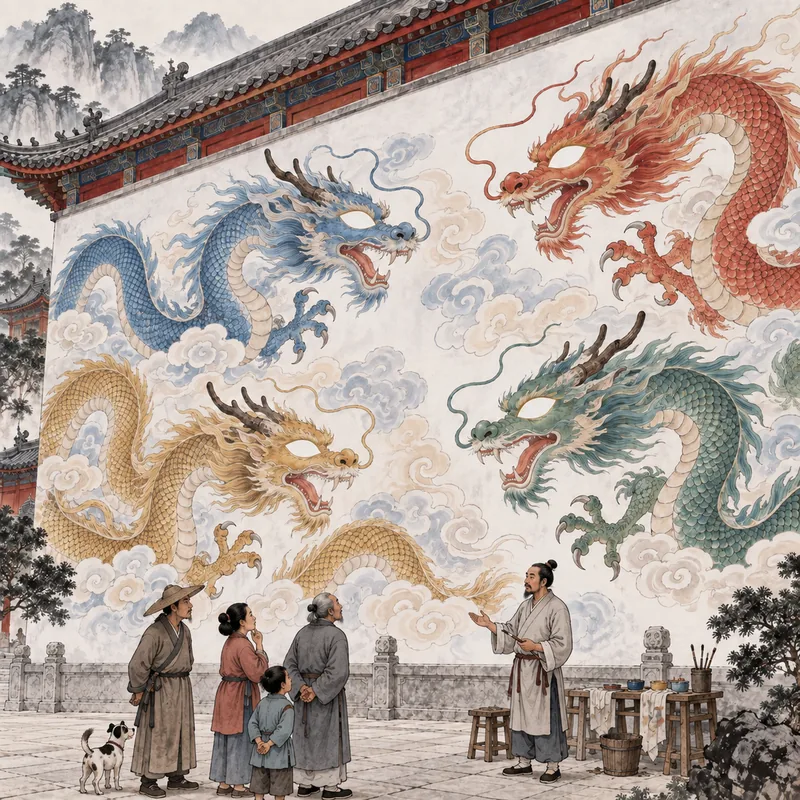
大家问他:为什么不画眼睛?
They asked him: why no eyes?
Le preguntaron: ¿por qué sin ojos?
他说:点上眼睛,龙就飞走了。
He said: once I dot the eyes, the dragons will fly away.
Dijo: en cuanto les ponga los ojos, se irán volando.
没有人相信。
Nobody believed him.
Nadie le creyó.
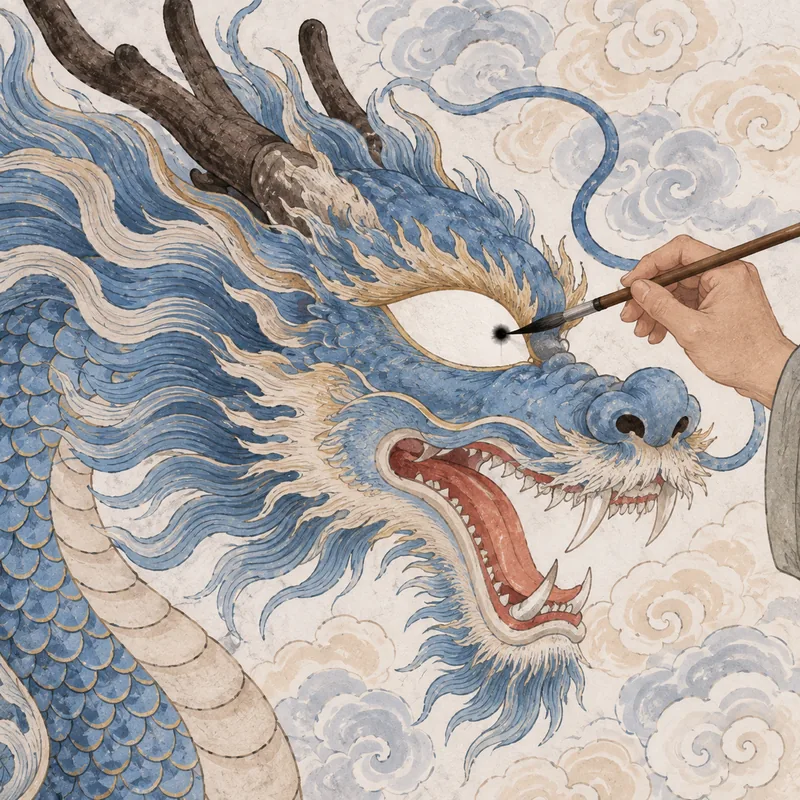
画家拿起笔,给两条龙点上了眼睛。
The painter took up his brush and dotted the eyes of two of them.
El pintor tomó el pincel y les puso los ojos a dos de ellos.
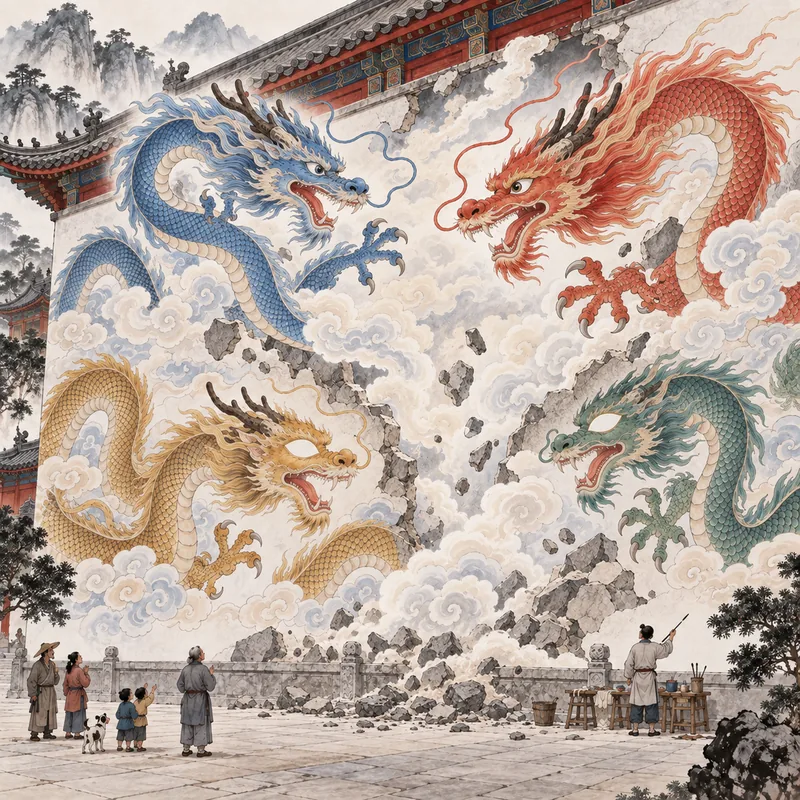
天忽然黑了,墙塌了一块。
The sky went dark and part of the wall broke open.
El cielo se oscureció y parte del muro se abrió.
那两条龙飞走了。
Those two dragons had flown away.
Aquellos dos dragones se habían ido volando.
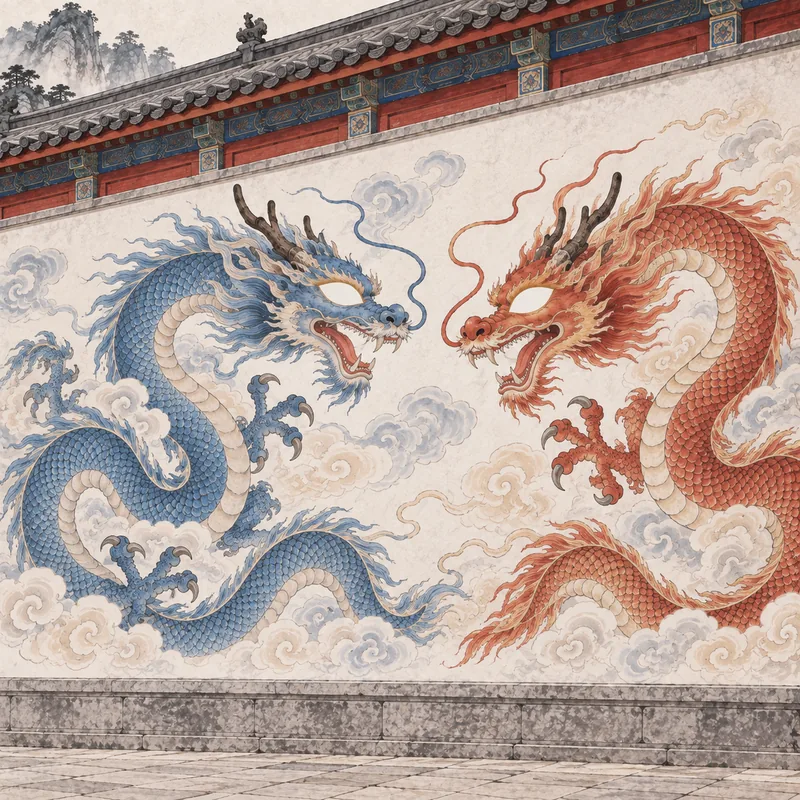
墙上还剩两条。
Two dragons were still on the wall.
En el muro quedaban dos dragones.
它们到现在还没有眼睛。
To this day they have no eyes.
Hasta hoy siguen sin ojos.
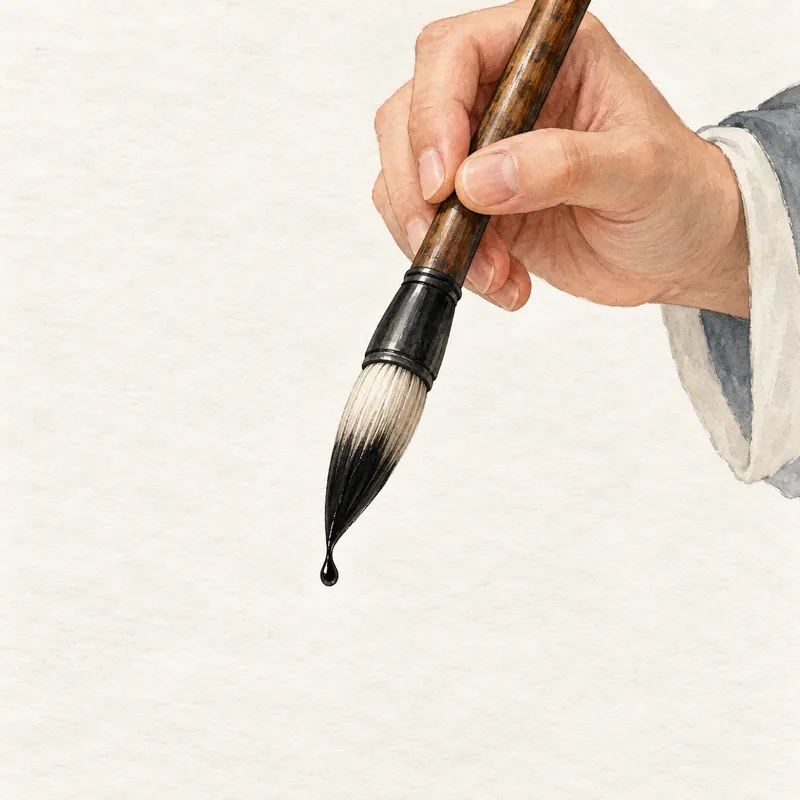
最要紧的那一笔,常常只有一点点。
The stroke that matters most is often the smallest.
El trazo que más importa suele ser el más pequeño.
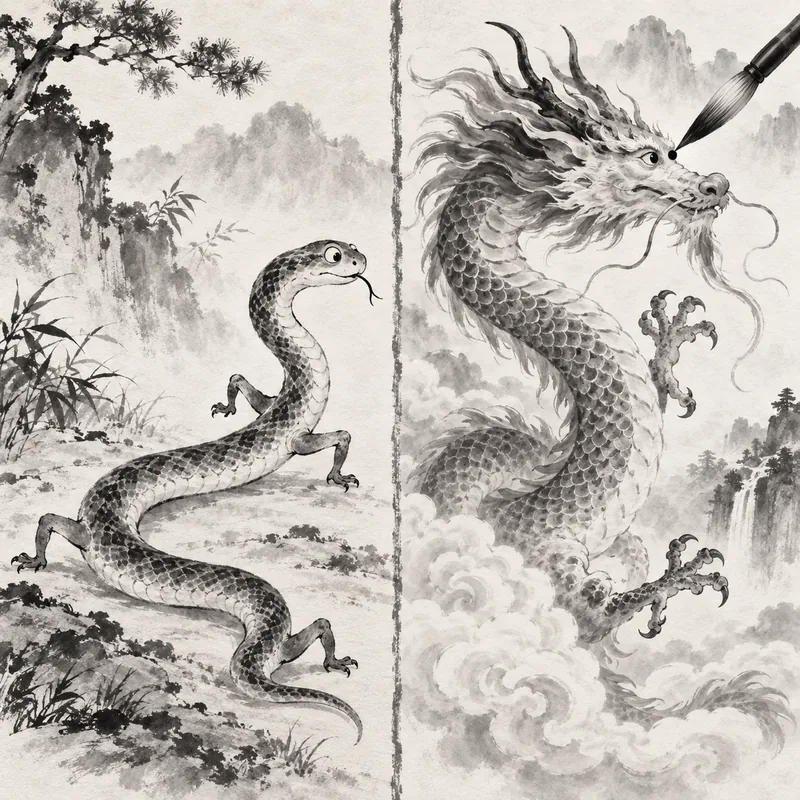
画蛇添足:已经画好了,又多加一笔。
画蛇添足: it was finished, and one more stroke was added.
画蛇添足: ya estaba terminado y se añadió un trazo de más.
画龙点睛:还差一笔,加上就成了。
画龙点睛: one stroke was missing, and adding it finished everything.
画龙点睛: faltaba un trazo, y al añadirlo quedó completo.
同样是画,同样是一笔。
The same brush, the same single stroke.
El mismo pincel, el mismo trazo.

菜都做好了,最后撒上一把葱花。
The dish was done; at the very end, a handful of chopped scallion went on.
El plato ya estaba listo; al final le echó un puñado de cebollín.
一盘菜一下子就香了。
And all at once the whole dish came alive.
Y de golpe el plato entero cobró vida.
要是那把葱花不撒呢?
And if that handful had been left off?
¿Y si no le hubiera puesto ese cebollín?