和同事吃午饭
Lunch with Coworkers
Almuerzo con los compañeros
📚 在中国工作 · Working in China · Trabajar en China · 5 本 · 5 books →
上班·找工作 · Work · Trabajo朋友·邻居 · Friends & Neighbors · Amigos y vecinos
🛤 Your First 20 Books in Chinese · 19 / 20路上的下一本 · Next on the road · Siguiente →
看朗读视频:点下面的按钮 · Watch the read-along: tap a button · Ver el video: toca un botón
锁屏也能听 · Works with the screen locked · Funciona con la pantalla bloqueada
hé tóngshì yìqǐ chī wǔfàn
和同事一起吃午饭
Lunch with Coworkers
一次看完 · The whole book · Todo el cuento
和同事一起吃午饭
Lunch with Coworkers
Almuerzo con los compañeros

小李:十二点了!马克,走,一起吃午饭去!
Xiǎo Lǐ: It's twelve! Mark, come on — let's go have lunch!
Xiǎo Lǐ: ¡Ya son las doce! Mark, vamos a almorzar juntos.
我:好啊!我们吃什么?
Me: Sure! What are we eating?
Yo: ¡Vamos! ¿Qué comemos?

小李:你想吃什么?
Xiǎo Lǐ: What do you feel like?
Xiǎo Lǐ: ¿Qué se te antoja?
我:随便。
Me: Whatever.
Yo: Lo que sea.
小李:哈哈,饭馆里可没有一个菜叫「随便」!
Xiǎo Lǐ: Ha ha, no restaurant has a dish called "whatever"!
Xiǎo Lǐ: ¡Ja, ja! ¡En ningún restaurante hay un plato que se llame «lo que sea»!

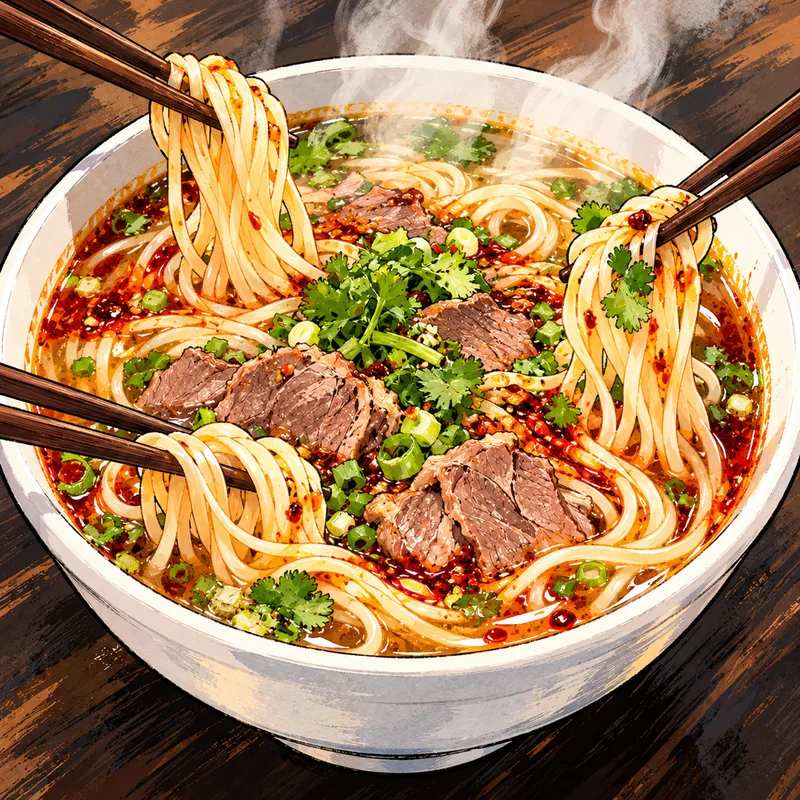
老王:楼下那家牛肉面不错,又快又好吃。
Lǎo Wáng: The beef noodle place downstairs is good — fast and tasty.
Lǎo Wáng: El lugar de fideos con res de abajo está bien: rápido y rico.
我:好,那我们去吃牛肉面吧!
Me: OK, let's go have beef noodles!
Yo: ¡Bueno, vamos a comer fideos con res!
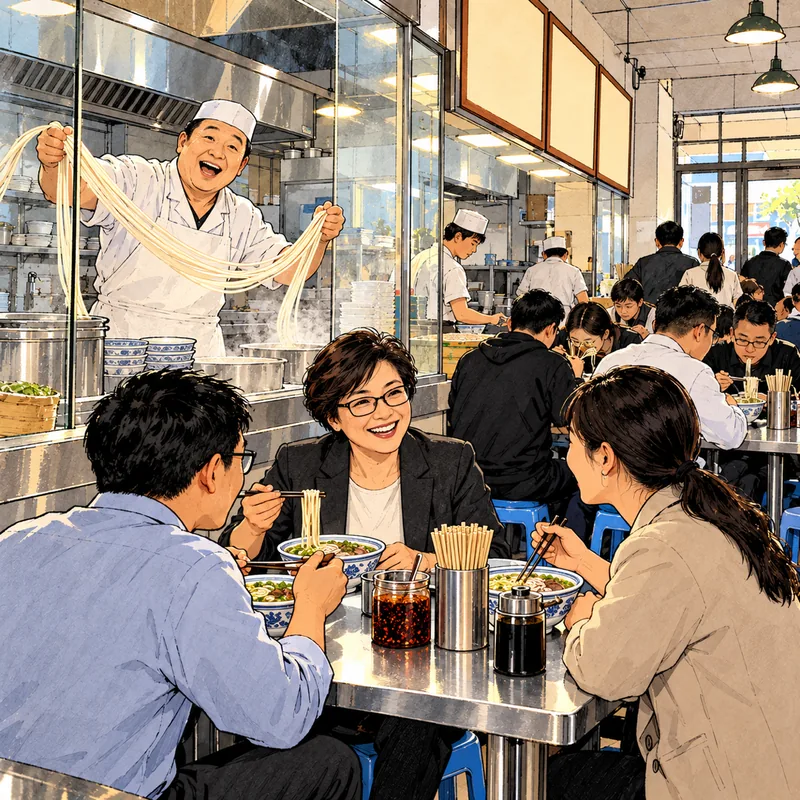
老板:几位?吃什么?
Owner: How many? What'll you have?
Dueño: ¿Cuántos son? ¿Qué van a comer?
我:三碗牛肉面。我的那碗不要香菜。
Me: Three bowls of beef noodles. No cilantro in mine.
Yo: Tres platos de fideos con res. El mío sin cilantro.
老板:好嘞!三碗牛肉面,一碗不要香菜!
Owner: Coming up! Three beef noodles, one without cilantro!
Dueño: ¡Marchando! ¡Tres de fideos con res, uno sin cilantro!
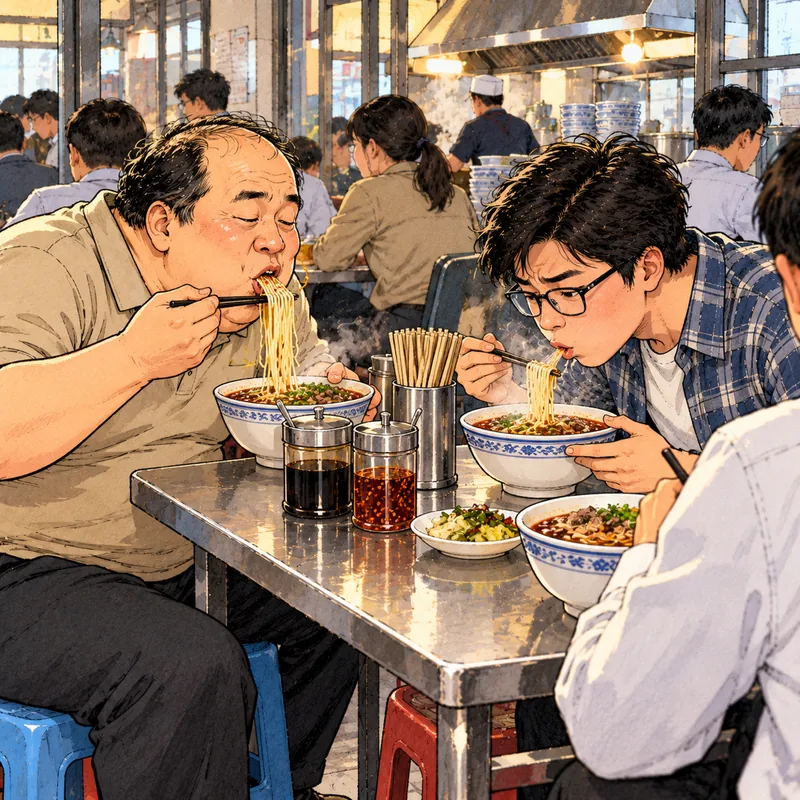
小李:马克,你会用筷子吃面吗?
Xiǎo Lǐ: Mark, can you eat noodles with chopsticks?
Xiǎo Lǐ: Mark, ¿sabes comer fideos con palillos?
我:会啊!吃面的时候可以出声音吗?
Me: Sure! Is it OK to slurp when you eat noodles?
Yo: ¡Claro! ¿Se puede hacer ruido al comer fideos?
老王:可以!出声音,说明面好吃!
Lǎo Wáng: Of course! Slurping means the noodles are good!
Lǎo Wáng: ¡Claro! ¡Si haces ruido, es que están ricos!
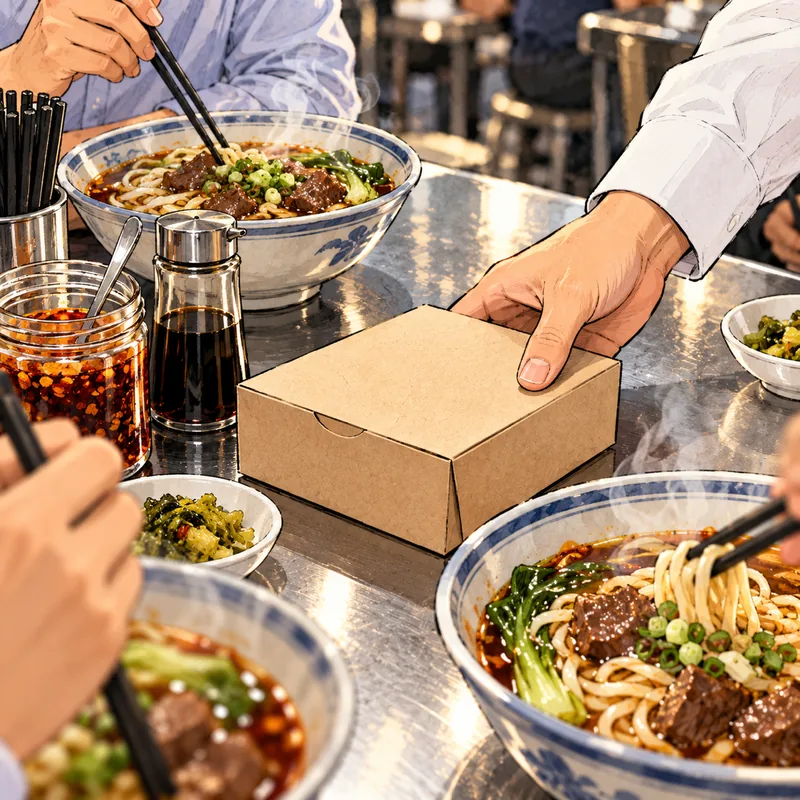
我:对了,这是我从长城带回来的点心,大家尝尝!
Me: Oh, and here are some snacks I brought back from the Great Wall — try some!
Yo: Por cierto, estos son unos dulces que traje de la Gran Muralla, ¡pruébenlos!
小李:哇,你还记得!谢谢马克!
Xiǎo Lǐ: Wow, you remembered! Thanks, Mark!
Xiǎo Lǐ: ¡Vaya, te acordaste! ¡Gracias, Mark!

我:今天我请客吧!
Me: Lunch is on me today!
Yo: ¡Hoy invito yo!
小李:不用不用,我们AA吧,每个人付自己的。
Xiǎo Lǐ: No, no — let's go Dutch. Everyone pays for their own.
Xiǎo Lǐ: No, no, mejor pagamos a medias: cada uno lo suyo.

小李:吃饱了,我要午休一下。
Xiǎo Lǐ: I'm full — time for a little nap.
Xiǎo Lǐ: Ya comí; voy a echarme una siestecita.
我:中国公司可以午休?太好了!
Me: You can take a nap at a Chinese company? That's great!
Yo: ¿En las empresas chinas se puede dormir la siesta? ¡Qué bien!
小知识:别人问你「想吃什么」,最好不要说「随便」——大家常开玩笑说:「随便」最难做!
Good to know: when someone asks what you want to eat, try not to say "whatever" — people joke that "whatever" is the hardest dish to make!
Dato útil: si te preguntan qué quieres comer, mejor no digas «lo que sea»: la gente bromea que «lo que sea» es el plato más difícil.
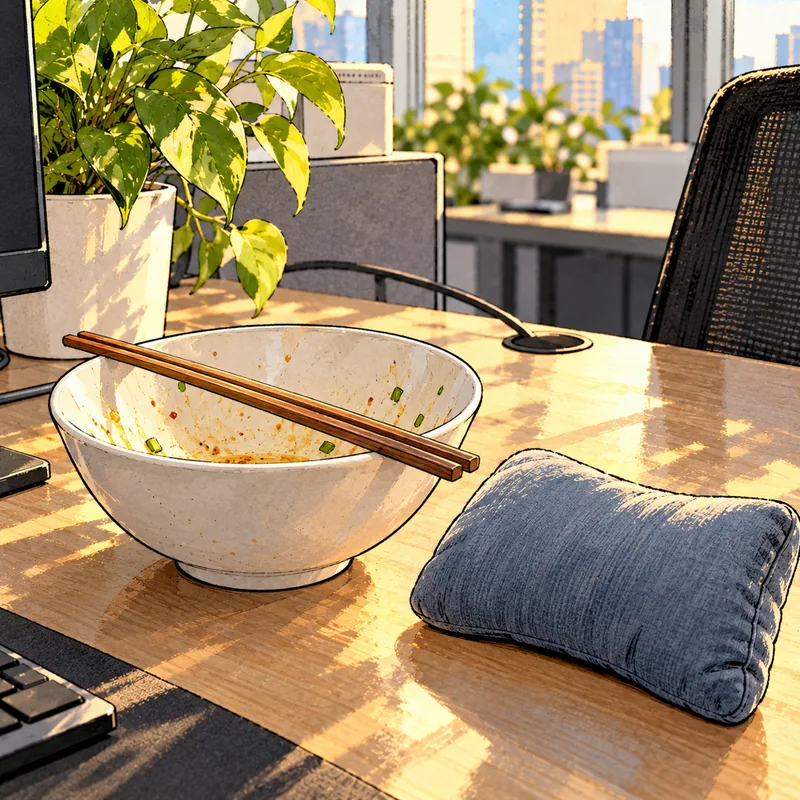
「AA」就是每个人付自己的钱。很多中国公司中午可以趴在桌子上睡一会儿。
"AA" means everyone pays for themselves. In many Chinese offices, people nap at their desks after lunch.
"AA" quiere decir que cada uno paga lo suyo. En muchas oficinas chinas la gente duerme un rato en su escritorio después de comer.
生词 · Words in this book · Palabras
104 个词 ,其中 40 个是全站第一次出现 · 104 words, 40 appearing for the first time anywhere on the site
- 和hé
- 同事tóngshì
- 一起yìqǐ
- 吃chī
- 午饭wǔfàn
- 小李Xiǎo Lǐ
- 十二点shí'èr diǎn
- 了le
- 马克Mǎkè
- 走zǒu
- 去qù
- 我wǒ
- 好hǎo
- 啊a
- 我们wǒmen
- 什么shénme
- 你nǐ
- 想xiǎng
- 随便suíbiàn
- 哈哈hāhā
- 饭馆fànguǎn
- 里li
- 可kě
- 没有méiyǒu
- 一个yí ge
- 菜cài
- 叫jiào
- 老王Lǎo Wáng
- 楼下lóuxià
- 那家nà jiā
- 牛肉面niúròumiàn
- 不错búcuò
- 又yòu
- 快kuài
- 好吃hǎochī
- 那nà
- 吧ba
- 老板lǎobǎn
- 几位jǐ wèi
- 三碗sān wǎn
- 我的wǒ de
- 那碗nà wǎn
- 不要bú yào
- 香菜xiāngcài
- 好嘞hǎo lei
- 一碗yì wǎn
- 会huì
- 用yòng
- 筷子kuàizi
- 面miàn
- 吗ma
- 的de
- 时候shíhou
- 可以kěyǐ
- 出chū
- 声音shēngyīn
- 说明shuōmíng
- 对了duì le
- 这zhè
- 是shì
- 从cóng
- 长城Chángchéng
- 带dài
- 回来huílai
- 点心diǎnxin
- 大家dàjiā
- 尝尝chángchang
- 哇wa
- 还hái
- 记得jìde
- 谢谢xièxie
- 今天jīntiān
- 请客qǐngkè
- 不用búyòng
- 每个人měi ge rén
- 付fù
- 自己的zìjǐ de
- 吃饱chībǎo
- 要yào
- 午休wǔxiū
- 一下yíxià
- 中国Zhōngguó
- 公司gōngsī
- 太tài
- 小知识xiǎozhīshi
- 别人biérén
- 问wèn
- 最好zuìhǎo
- 说shuō
- 常cháng
- 开玩笑kāi wánxiào
- 最zuì
- 难nán
- 做zuò
- 就是jiùshì
- 钱qián
- 很多hěn duō
- 中午zhōngwǔ
- 趴pā
- 在zài
- 桌子zhuōzi
- 上shang
- 睡shuì
- 一会儿yíhuìr